We held the potluck by the poolside that summer evening in Austin, Texas.
July was seeping into August.
It was the last dinner before the fellows left Austin for their respective African countries, after a successful six weeks of immersive work on their projects.
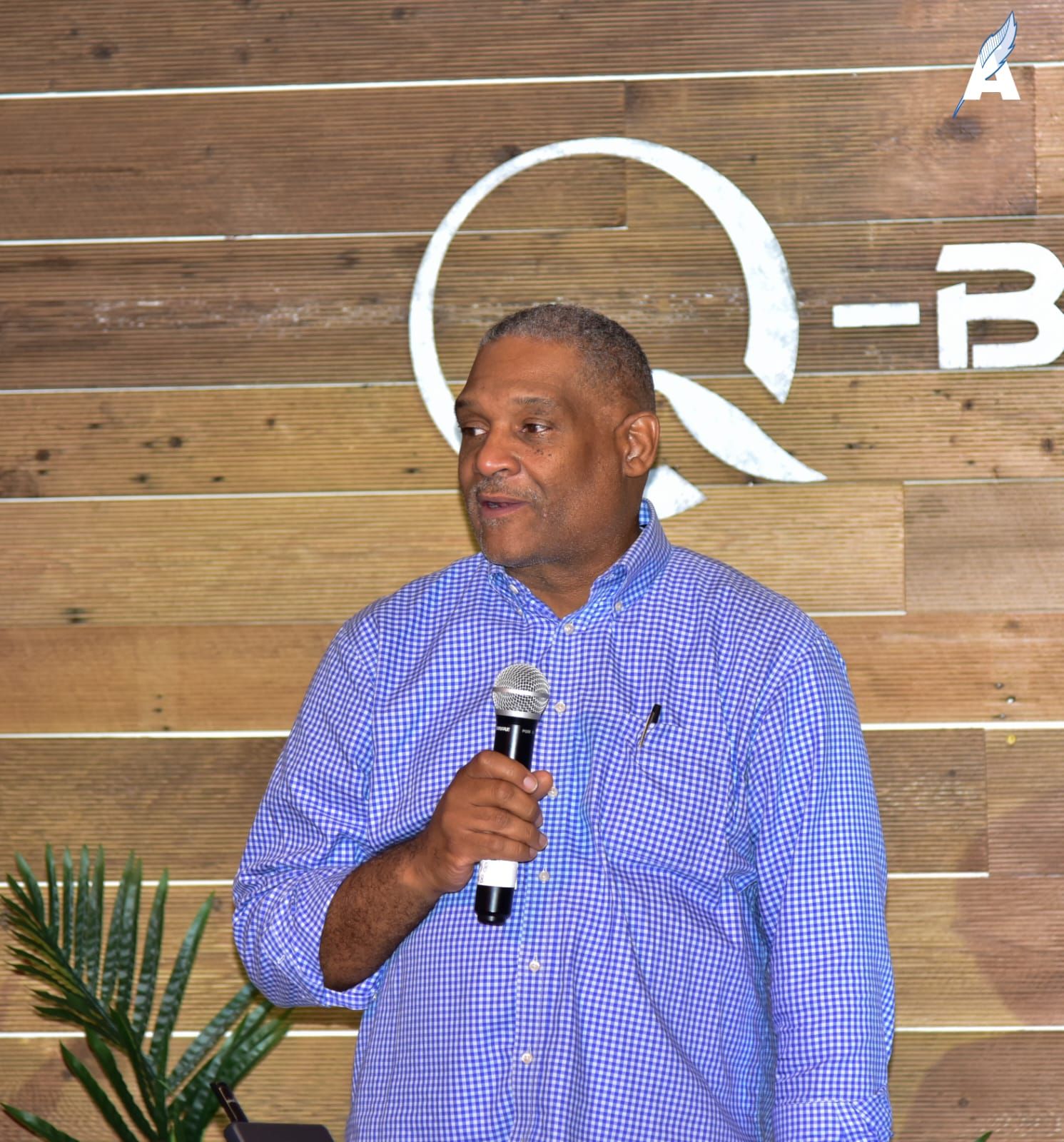
Professor Rodney Northern, who had been our tutor for the fellowship’s business track at the University of Texas at Austin’s McCombs School of Business, was dressed in casual attire—a pair of white shorts and a black t-shirt. He stood behind the grill, barbecuing meat. Turning it on the grill, then slicing the already cooked delicacy and serving us from the queue we had made, plates in hand. Like the father and mentor we met in Texas, giving us a taste of the Lone Star State after training us in class for weeks. Over the sizzling on the grill, he made a joke here, nodded to someone there, laughed, smiled.
Sandra, Andrea, and Caroline, our beloved admins for the fellowship who’d ensured we had not only learned and networked but had also had fun in Austin, were unpacking drinks and plastic cups, and laying out plates on a table. Smiles on their faces. It’s amazing how much we’d all connected. The bond was palpable; I could almost grab it in my hand, feel its warm, smooth surface, then stuff it in my pocket, for it was a treasured possession.
Fisokuhle Khumalo from Eswatini was our DJ, piping great Amapiano from his Bluetooth speaker. Just like Prof, we, the fellows, were also in casual wear, unlike the other weeks in class, where it was official or business-casual.
The burr of conversations above the music was of happy chatter, with even the swimming pool seeming to join us, its surface dimpled by glimmers of the last rays of Austin’s sun.
Later that evening, we exchanged gifts, took photos to keep the memories with the backdrop of the setting sun, the feeble rays lighting us and our smiles and poses behind Melchisedeck Boshirwa’s camera, the fellow from Burundi.
We sang along to different music. Some sat by the pool and dangled legs, such that their ankles dipped into the water. We danced. Eric Omondi, the Ugandan entrepreneur cum comedian and pitch artist, cracked jokes, sending the group giggling, sometimes launching into deep laughter.
Chester Maphalala kept shouting his trademark psyche-up words, ‘Let’s go!’ as he pulled dance moves that made heads shoot backwards with laughter. We patted each other on the shoulder mid-conversation, hugged and passed snacks around.
I remember someone playing Eminem’s hit track Not Afraid, and Precious from Zimbabwe, Souad from Niger, Thato from Lesotho, and me rapping alongside Em.
We were one big family of young African leaders and Americans, bonded tight over six weeks of the Mandela Washington Fellowship in Austin.
But then, as the evening wore on, we began to reflect on the fellowship.
Music stopped. We, the 22 fellows, had come in with ideas and, through the networking and academic sessions, weren’t the same people we were six weeks ago. We were more confident, ready to travel back to our beloved continent, Mother Africa, to work and build our economies and societies.
“You have it in you,” Rodney Northern had always reiterated in class at the McCombs School of Business, a school whose tagline remains forever etched in our hearts: What Starts Here Changes The World.
“Africa has everything she needs, and you guys have great potential and can build just about anything you decide,” he’d also tell us.
Just as the sun makes a shadow, our happy moment also produced a hovering shadow of sadness we could no longer ignore. We had come to the end of the fellowship. This cookout would mark our last dinner together.
And as we reflected on these past immersive weeks, we found ourselves in that liminal space between happiness and sadness. Happy for the family we’d become, the growth we’d witnessed, and the potential that lay ahead in our futures, but sad because the time to say goodbye was at hand.
It was then that the man this story is largely about, Professor Rodney Northern, invited us to form a circle beside the pool. We held hands. A symbol of the bonds we’d built: African nation to African nation, and US to Africa.

A hush went over the group as Rodney Northern cleared his throat.
“As we hold hands,” he paused. “I’d like to bless you. As your father, friend and professor.” He spoke in his American accent, one we’d gotten accustomed to over the fellowship. “It was a big honour to know and guide all of you, and I can’t wait for what will arise in Africa from you…”
I don’t recall all he said, because it was then that I noticed various teary eyes. Shifting legs. Hands held, lifting where fingers connected from one person to the other, to dab at eyes. I felt a prickle in my own eyes and lifted my gaze skyward, trying to swallow back the welling tears.
And so it was that with the blessings of Professor Rodney Northern, an academic giant who’d become family, a man with a link to the African nation of Mali, that we broke away that evening and retreated to our apartments to start packing up. Our time in the US was drawing to a close, and our new journeys as leaders in Africa were beginning.
***
It’s about six months now since that evening by the poolside. I open my laptop and gaze at a blinking cursor, willing myself to start writing this story. A story I hope will do several things: Help the fellows I was with in Austin understand the story behind the story of their professor, reveal the experiences of Rodney Northern working with young African leaders and the potential he witnessed first-hand in Africa through the fellows, and inspire young entrepreneurs—really anyone who is someone from somewhere and on a journey elsewhere, somewhere greater and better—to keep going.
***
When I got back to Kenya, supported by Africa No Filter’s Kekere Storytellers Grant, I embarked on a project to tell the stories of select 2025 Mandela Washington Fellows. The goal: to disabuse the notion that Africa is backward by showing young, innovative African leaders who represent the progress and opportunity of the continent.
But these stories, which all featured on Qazini, a pan-African storytelling platform, wouldn’t be complete without the story of one Rodney Northern.
So, on a drizzling February night in Nairobi, I interviewed Professor Rodney Northern via Zoom.
“I grew up on college campuses.”
Rodney Northern, a black American, was born in Kansas City, Kansas, in the early 60s, to a fairly young mother who was about twenty years old.
His mother, who had always wanted to go to university, decided to actualise her dream when Rodney was only three months old. The family, comprising Rodney, his older sister, his mother and father, moved to California.
Rodney’s father was a community entrepreneur who owned a barber and beauty shop in Kansas City for almost 60 years.
“Unfortunately, Dad and Mum tried, but California wasn’t Dad’s thing; he missed Kansas and his parents and eight siblings in Kansas,” Rodney narrated. “So they separated, and my sister and I remained in California with my mum.”
For a man who would later become a serial entrepreneur and business professor, it was interesting to learn that he started going to campus when he was just a kid.
“My sister and I grew up essentially on college campuses as my mum got her bachelor’s degree, and then a couple of master’s degrees, and later her first PhD.” (She later received a second PhD, but by then, Rodney was out of the home, doing life on his own.)
While the family never lived on campus, Rodney’s mother, who did not have a babysitter, went to school most of the time with her kids. Sometimes they all sat through classes, while other times, she took them to a location on campus, like the library, and told them, “You guys stay here. I’ll be back in a couple of hours.”
I asked him how long this had gone on.
“Mum started going to school when I was three or four, and from there it felt like she was always in school. My sister and I going to campus with mum was something that went on all the way till I got to high school. She finished her PhD by the time I got to high school.”
Perhaps, a lesson on “Keep Going”, which Rodney would later talk about in our interview, had long been embedded in his mother’s journey in pursuit of education.
Rodney’s mother studied Early Childhood Education in Counselling. She worked to help children in underprivileged communities get early childhood education. She also worked with community organisations to help find ways to better educate the population. She later became a university professor.
Since I’d read stories of America in the early and late 60s touching on the segregation of blacks, I lobbed a question at Rodney: Did he and his family face any of that?
“At the time I grew up, on the west coast you were segregated more by economics than by racism, although there still was subtle segregation by racism, but not as overt as what other people were facing in the south and in the mid-west.”
Looking at the man Rodney is today, I couldn’t help but wonder whether his mum’s academic path and the fact that he grew up on campus, tinkered with his compass to determine his North.
“I think most of my childhood feeds into it,” he answered, “most of it feeds into my desire today to facilitate whatever kind of wisdom, knowledge, and learning that I can.”
“And did the whole situation put some pressure on you to also go to university?”
“While there was an underground expectation, it wasn’t overt. You knew you were going to college; the question was where and when. There was no pressure, and that was cool because you had to find your own path. But there was always an expectation that you had to go to uni.”
The Malian stepdad
When Rodney was in third grade, which placed him at about eight or nine years old, his mother married Ibrahima Coulibaly, a professor from the African nation of Mali.
One time, Rodney doesn’t remember the specific year, legendary footballer Pelé was playing in the World Cup, and Ibrahima Coulibaly took a young Rodney to one of the sports venues in Los Angeles. That was his first real introduction to the Malian before he married his mum.
When he became Rodney’s stepdad, Rodney got introduced to more Africans and their ways of living.
“My Malian dad had several friends from different West-African countries that he considered his brothers. They were always in the house, and I learned about their cultures and foods.”
While Rodney hasn’t made it to Mali yet, the family travelled to Paris one summer, where his stepdad had earned his Master's. They spent the whole summer in Paris, and Rodney got the opportunity to see Paris and the African side of Paris through his stepdad’s family members.
“This expanded my idea of the world, in a good way, not knowing the impact things have often until later,” he told me.

Tracing his career
I asked Rodney whether his experiences growing up in California, travelling to Paris, learning a bit about West-African culture, and having a biological father who was a community entrepreneur had influenced his path into entrepreneurship.
“Growing up in California shaped who I am; it was a place where if you could imagine anything, it could be done,” he said. “As a teen, apart from playing sports just like other teens, I also worked jobs, and yes, maybe Dad in Kansas City being a community entrepreneur played a role, but it probably goes back beyond him. My mother’s family was entrepreneurial; they owned houses for renting in Kansas.”
Like most high schoolers, Rodney needed to go to concerts to have fun and just be a young man. Turning to your parents all the time to fund such extracurricular activities doesn’t work, though. They might question whether you are studying or thinking about concerts.
So, he and a buddy, Brian, decided to find a way to fund their attendance at concerts. Maybe this was a foreshadowing of the entrepreneurial spirit in the young teenager; they started a window-cleaning business. Not for profit, but to solely make money to attend concerts. Rodney chuckled as he narrated these fond memories.
After high school, he joined the University of California, Riverside, and pursued a bachelor’s degree in Economics.
“After I graduated, I’d gotten a job offer that paid thirteen thousand dollars and provided a company car,” he narrated.
This was in 1986. However, Rodney knew that he could get a better job if he went to graduate school for two more years.
“I applied for graduate school. Though they liked my application, they told me I needed to first get one more year of work experience.”
They waitlisted him for one year, but then, by a stroke of fate, an opportunity opened just when he was thinking of taking the job offer he’d received.
“The school called me and said, ‘Hey, someone just dropped out. So, there’s a scholarship for you if you can get here.’”
At grad school, Rodney was a finance major. “In my second year,” he narrated, “I put marketing on the back of finance.”
Upon graduating in 1988, his instincts to pursue grad school paid off. He got employed by Fortune 500 companies, earning more than triple the amount his initial job had offered.
“I was running brands for some Fortune 500 companies, and quickly learned that I excelled at the innovation side of it, that is, creating new businesses or brands or products that helped the companies grow more. I did that for Coca-Cola, The Clorox Company, Miller Brewing Company, SC Johnson, Tyson Foods, and Sara Lee International. This job taught me that not only was I so good at it, but that I was also interested in it.”
Rodney ran brands for these companies for about 23 years before he decided to strike out on his own.
The rise of the founder
When Rodney left the corporate world, he started doing strategy and business development consulting. He also got into the advertising business, helping small and medium-sized advertising businesses grow.
“I guess that’s where the entrepreneurship bug kicked in,” he narrated. “Along the way, I tried all kinds of things.”
He sold MP3 players imported from China, then at some point he sold extra oxygenated water, and then went into selling digital t-shirts at a time when a new tech entered the US, allowing for digital prints on t-shirts. The digital prints had movement that shifted with light.
“I was just curious—can I do this?” he chuckled, remembering how it was curiosity that kept him going and trying all these business ideas.
“I also pulled my buddy Greg Head into a PPE business during the COVID-19 pandemic.” He laughed at this, and I joined in, remembering Greg, a storied behavioural scientist and marketing strategist who had come in during one of our classes at the Mandela Washington Fellowship as a guest lecturer. He talked to us about research and analysis, expanding our ideas and knowledge.

Rodney currently runs the profitable company, Multimerica Media Ventures, a digital media company.
“I started Multimerica in 2021, coming off the back of COVID. We’re three partners running the company as a flat virtual organisation; no employees, everyone is a contractor.”
Multimerica is a multi-million dollar company that has seen an annual growth of at least 2x each year and is poised to grow 3x in 2026.
I wanted to know their secret to running a successful business.
“We did a lot of research to understand what the market needed, and to help us build a hypothesis about how we could survive long-term and compete with anybody. In the US, there is a big shift in revenue from regular television to digital television and streaming. It’s always good to be where the money is growing, and grow with it, as you continue to innovate in your space to ensure you’re adding value to your clients.”
Before my interview with Rodney Northern, I’d alerted other fellows on a WhatsApp group that I’d be talking to Prof. Thato from Lesotho requested me to ask a question about common business mistakes.
“From your experience, what is a common mistake you see most entrepreneurs making?” I asked Rodney, still marvelling at Multimerica’s success so far.
“I see entrepreneurs who have ideas that work for them, but they don’t validate these ideas for the rest of the marketplace to see if that’s something they can scale. They don’t research to see if someone else has the same issue or needs that service or product.”
With his response, my mind returned to Austin, where Prof, as we call him, during a one-on-one session, taught me the importance of market research. “Before anything else, ask yourself, who is the willing buyer, and why are they willing to buy your product or service?” He also emphasised the importance of doing good (for society) but also making good (profits). “Do good, and make good.”
“Do you not know who I am?” Rodney’s entry into teaching and his introduction to MWF
There’s one thing Rodney Northern repeated during my chat with him: “Having the privilege to be in front of you guys (the fellows) and add something to what you already had was big for me.”
But I wanted to understand how he got there in the first place.
“My mother was a longtime university professor. She would have me come to her classes to talk about leadership. I also did a lot of work with Clark Atlanta University and the University of Michigan when I was recruiting for companies. I therefore got comfortable going into classes and sharing with students.”
One day, a friend of his came to him and asked, “Do you know anyone who could teach a class on business innovation? The McCombs School of Business at the University of Texas at Austin is looking for someone.”
Rodney looked at his friend, letting silence sit with them for a while. When he spoke, he asked, “Do you not know who I am?”
In September 2020, Rodney taught his first class at McCombs. He told me that teaching is one of the most gratifying things he does. “I have the opportunity to not only share what I know but also learn what my students know. And it is satisfying to see my students' transformation. For example, the 2025 MWF fellows. It’s not that you guys did not have greatness in you, but it was my job to work with you to bring out what you had.”

I later sought statements from fellows whom Rodney helped grow, and got one from Ugandan Eric Omondi, the founder of Esonga Menstrual Care.
He wrote to me via WhatsApp: “I came into the class thinking I was running a strong social enterprise. I measured success mostly through beneficiaries reached, awareness sessions and partnerships. But in class, I realised I was still operating in a project mindset. He (Rodney) kept pushing us to separate impact from activity and to think in systems. The turning point for me was understanding distribution and unit economics. It forced me to redesign Esonga from outreach programs into a structured delivery model.”
When I thought about how Rodney’s mum played a role in shaping the person he is today, by taking a young Rodney to class and later inviting him as an adult to give guest lectures to her students, a memory surfaced. Over the summer during the fellowship, Rodney continued the tradition by bringing along his twelve-year-old daughter, Samia, who sat through the class as a visitor. We all admired her courage when she raised her hand and asked a question.
I reminded Rodney about that moment, and he confirmed what I’d suspected, “It was a very proud dad moment.”
Negative stereotypes about Africa are because others fear what you hold
I decided this was a good point to segue into Rodney being our tutor for the fellowship.
“And how did you specifically end up in a class teaching a cohort of young African leaders for the Mandela Washington Fellowship?”
“When you’re in alignment with what you’re supposed to do in this world,” he answered, “opportunities come.”
He went on to recall, “The Professor who’d been running the MWF program for the McCombs School of Business for ten years was retiring. He recommended me.”
Rodney and I also reflected on how the fellowship was put on pause this year. I asked for his thoughts.
“I feel bad. Looking at the value of this program, I hope the government brings it back. If we help the world to be better, then we’re all better. You remember I told you guys that you are Africa’s last hope? I said that because you carry the promise Africa brings in terms of economic evolution. As everybody is moving into the middle class, and considering how young you guys are, we need to have strong connections and ties with Africa. Something the program was enabling.”
Considering his experiences working with the young African leaders, I led Rodney into a discussion about how Africa is portrayed as backward. Is the belief that we (Africans) are not enough true or distorted?
“These negative stereotypes that you’re not enough are not true. You’ve got to dig deep into what’s inside this kind of feedback. It’s easy for folks to say that you’re not enough, but they say so because they are scared of what you really are. I think a lot of the negative feedback coming to you is driven by their fears of who you really are and the power you hold. Africans should then get clear on who they are and bring that forth. Africa is inventive, and that is beautiful and important.”

Let’s go! Find a way and make a way to keep going
Before we closed the interview, I asked Professor Rodney Northern about his best moments with the fellows, and what his advice to us was about half a year after he was with us in class.
“Each of those six weeks with you guys was big for me. From day one, introducing ourselves in class, ‘Hey, I’m Teddy from Ethiopia…’, that simple exercise that we did to get to know each other. And in the end, everybody knew each other. It was also great seeing that by the time we ended, a lightbulb had gone on for everyone. Everyone was like, ‘Hey, we can do this, and we’re gonna do it, and we’re gonna do it together,” he said.
“I also enjoyed the one-on-one coaching sessions with all of you, and the case studies we looked at in class, approaching them from different perspectives. Knowing that you guys were picking something to help you understand better what you were doing was great. I felt like I was at home.”
On his advice to us, the fellows:
“I just want to remind you all to keep going. Life can get in the way, but whatever the promises and dreams you have in your heart, you’ve got to keep going. If you stop, it’s not gonna happen. And every time you stop, you keep pushing your dreams back. Remember Chester and what he liked to say? ‘Let’s go!’ Find a way and make a way to keep going.”
At this point, the professor’s words weaved deep meaning into my heart.
What a simple yet profound piece of advice: Keep going.
I thought about all the challenges I’ve faced since coming from the fellowship in 2025, and the challenges of other fellows I’ve been in touch with.
Our ideas and dreams, how big they are and the promise they hold for not only our communities but also Africa and the world, aren’t a straight line as we’d love them to be. There are corners and meanders. Sometimes we gaze at the sunset, pride pouring into our hearts, knowing that on that day, we won. Yet, other times, the feeble rays of the setting sun remind us how weak we feel at the end of that day. But now I know—and it’s my prayer that every soul reading this story gets to know too—this simple yet profound advice: Find a way and make a way to keep going.

***
After closing the interview and Prof and I wishing each other well, I gazed at my laptop screen which displayed “Meeting Ended”. I thought of Chester, the fellow from the Kingdom of Eswatini. I remembered that last potluck dinner we had in Austin, and how Chester danced to Amapiano tunes, yelling at everyone who could hear him, “Let’s Go!”
Maybe this guy stole a leaf from Rodney’s book of great advice. Maybe he knew the way forward all along and was trying to tell us something.
***
This story is part of a series Lesalon Kasaine is writing, of the stories of select 2025 Mandela Washington Fellows. Read more about the Mandela Washington Fellowship for Young African Leaders, a program run by the US Department of State. Lesalon was himself an MWF 2025 Fellow. These stories are powered/supported by Africa No Filter through the Kekere Storytellers Grant.