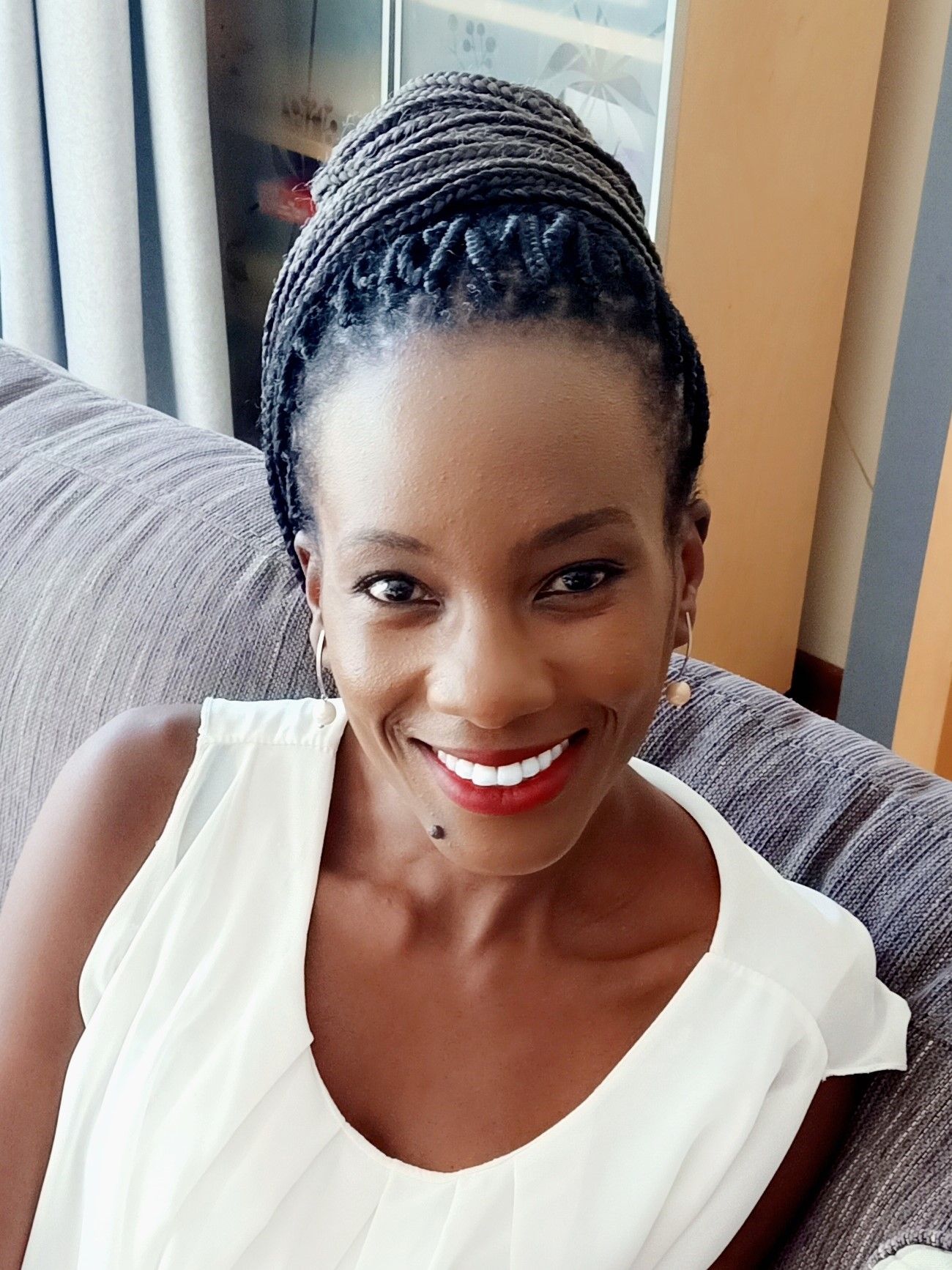
Ask most people what a conservationist looks like, and they will likely reach for the same familiar image: khaki shirt, cargo pants, muted colours, hair tightly controlled. A rugged silhouette… In other words, nothing that signals softness or femininity.
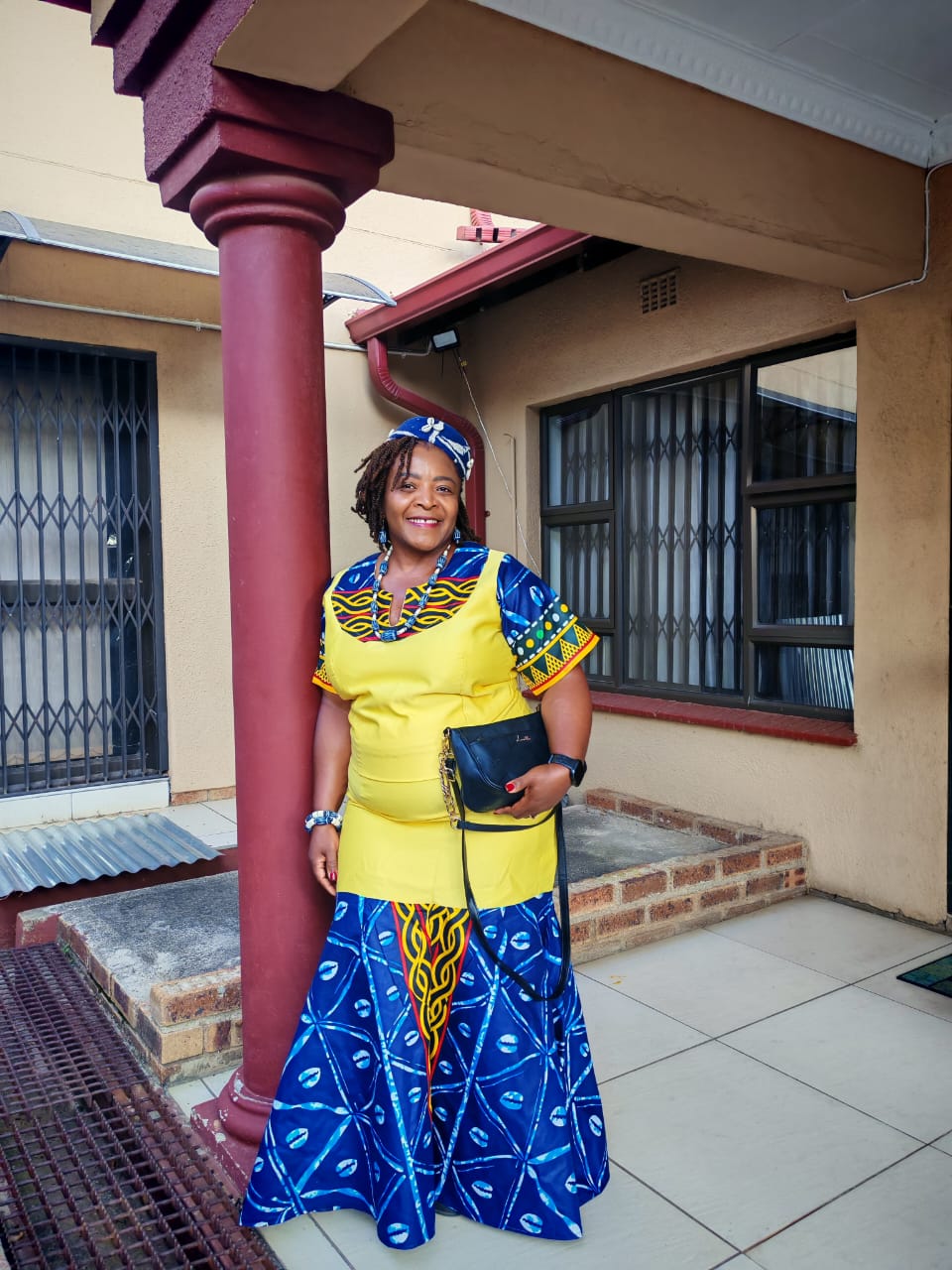
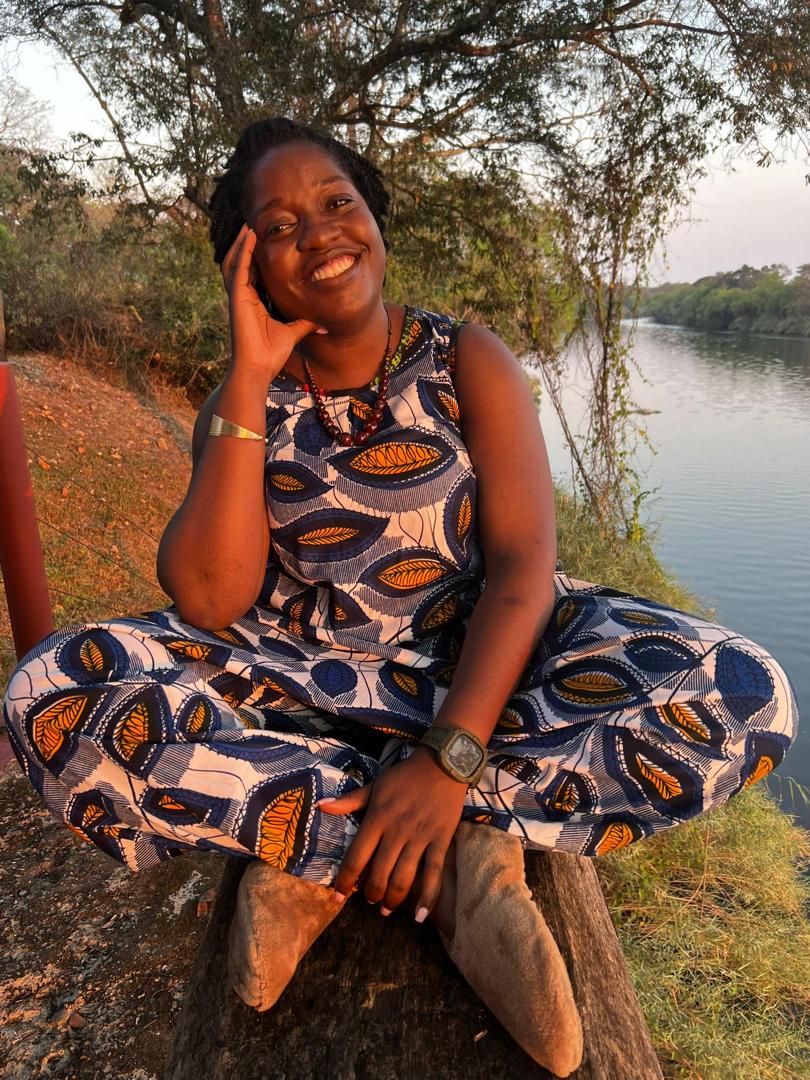
So when Chaona Phiri walks into a room full of her peers, wearing bright kitenge dresses, big hair, bold earrings and perfectly done nails, she disrupts the picture.

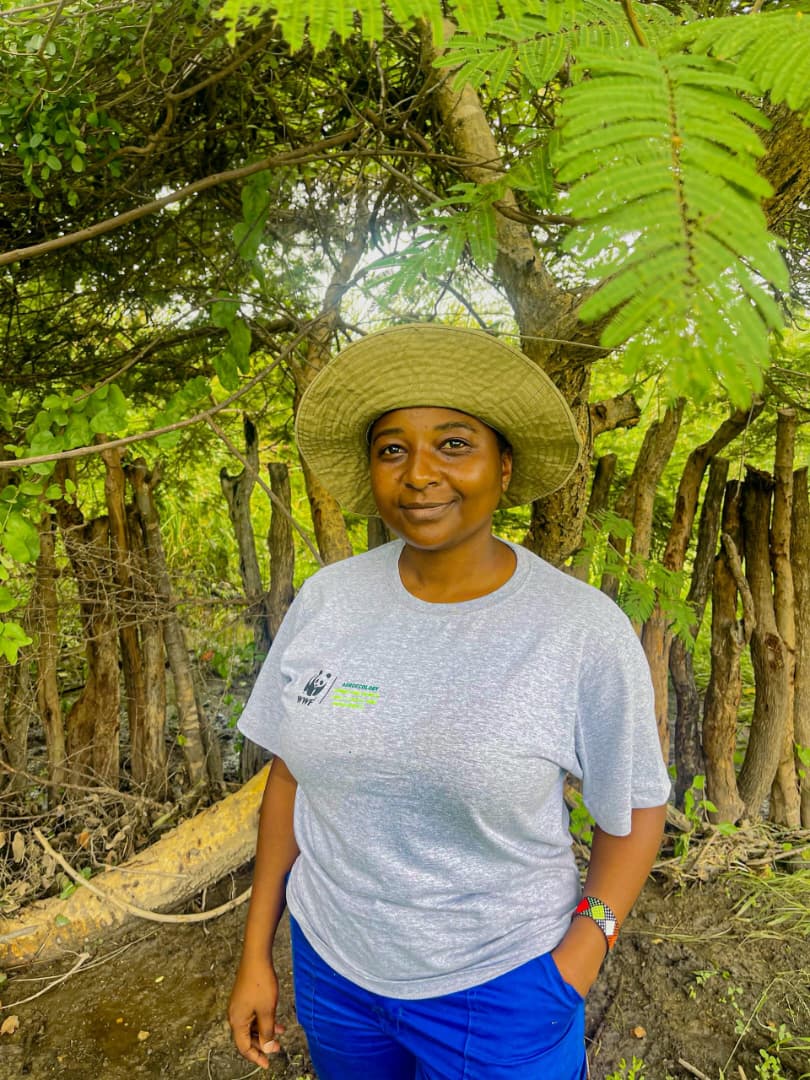
“Yes, I wear field clothes when I need to,” she says. “Of course I do. But even on my worst days, my nails and my earrings will always be on point.”
I believe her. During this interview, her long, dangly earrings are unmissable; her nails immaculate.
“Strangely, they brighten my day,” she adds.
In conservation spaces, the reaction often begins with confusion. Some reduce her to her appearance. They shouldn’t.
Chaona Phiri is one of the first Indigenous Zambian women ornithologists to break into and endure in a field that has long been dominated by middle-aged white men. She is an exceptional bird-sound specialist, able to identify species by their calls rather than by sight. She rose from intern to head of office. She has mentored a generation of young Zambian women scientists, many of whom are now leading projects or completing their postgraduate degrees. And she has just completed a PhD on an endemic Zambian parrot: the Black-cheeked Lovebird.
Through it all, and, perhaps, most importantly, Chaona Phiri remains unapologetically herself.
“I’ve always been a girly girl,” she says. “Even when I was a ‘princess tomboy’, I didn’t grow into a tomboy extra. I grew into a girlier girl.”
***
Chaona is the last-born child, the only girl, and, by her own admission, a princess. Her two older brothers both indulged and toughened her. She was pampered, yes, but never fragile. This is why she refers to herself as a ‘princess tomboy’.
Pets filled her childhood, and it felt only natural that she imagined a future as a veterinarian. She wanted to be better equipped to care for the creatures she loved.
However, that path was shattered abruptly when Chaona lost both her parents while still a preteen.
“I was like, what is going on?” she recalls. “I had this path I was on, and suddenly it wasn’t there anymore.”
Chaos followed. She became quiet, almost invisible. Then she was taken in by her mother’s younger sister, whom she now calls Mum. Mum sent her to boarding school, and Chaona emerged again, changed.
The princess tomboy softened into a young woman learning to refine herself and accept the hand she had been dealt. She fell in love with science and French. She also reclaimed her talkative nature.
“I had very little opportunity to stay in a shell for long,” she says. “Even when I tried, it didn’t work.”
***
At the University of Zambia, Chaona entered the School of Natural Sciences with dreams of studying medicine. Like thousands of first-year students, she was thrown into a system that assumed a background in pure sciences. Her Catholic school education, which had focused more on physical sciences, had not fully prepared her. Biology, the closest she had come to pure science, she excelled at. She arrived confident.
Her first semester humbled her.
“I think I got like 30 per cent in my maths test,” she says. “It was the first time in my life I failed. I was shocked. I cried.”
Her older brother, who was studying physics at the same university, let her cry for two days in his room.
Once Chaona recovered, she pushed on, but the end-of-term exams brought another blow. She wrote her name on the answer sheet instead of her admission number and was automatically disqualified. The examiner tore up the paper in front of her.
“There was no negotiation,” she says. “He just ripped it up.”
Repeating the course would have meant losing her government bursary. For an orphan, this was an impossible option. Medicine was no longer viable.
She pivoted back to veterinary medicine, her first love, but, in practice, it didn’t feel right. Then a new degree was launched: Ecology and Wildlife Management. She attended the introduction out of curiosity.
That felt right.
At home, she broke the news. Her mother was unconvinced.
“Where will you work?” she asked. “I’ve never heard of this course.”
She went ahead to give her daughter an assignment: list ten possible jobs in this field. Chaona returned with twenty-five.
“I’ve been blessed with a kind of determination that I don’t fully understand,” she says. “Plans change, things fall apart, and somehow I keep going.”
Now she calls herself a ‘determined princess’, one who has sometimes crawled to get to where she needed to go.
***
In 2008, while still an undergraduate, Chaona attended a talk at the university for World Migratory Bird Day. The lecture was well attended. The bird walk afterwards was not.
At the end of that walk, it was announced that four internships were available with BirdLife Zambia.
Chaona signed up.
Her internship began with the least glamorous work imaginable: digitising handwritten bird records dating back to 1955, compiled by a 74-year-old British ornithologist named Bob.
Bob was brilliant and infuriating in equal measure. Eccentric is the word. He wandered off mid-lesson in national parks. He washed his underwear in the basin meant for plates. He once made a peanut butter and jam sandwich using his underwear as a plate and offered her some.
She declined, obviously.
But in all his eccentricity, Bob taught her how to listen.
Birding under his mentorship was never about counting species. It was about sound, memory and story. Zambia has nearly 800 bird species, and Bob seemed to have a sound story for almost all of them.
“There were times when he’d written something, and I couldn’t read it,” Chaona recalls. “I would ask him what it was, and he’d take me back to the exact day he wrote it. You can imagine how long this internship took.”

Then, as if the universe itself was rooting for her to spend more time with Bob, the University of Zambia shut down. This was following an incident where a student was killed in a hit-and-run. Protests erupted and, amid the chaos, the President ordered the university closed indefinitely.
It stayed closed for nine months.
With nowhere else to go, Chaona went to BirdLife every day, digitising records and learning from Bob. What could have been lost time became an apprenticeship.
That period gave her an extraordinary ability not just to love birds, but to identify them by sound alone. Today, she is widely recognised as the first and, for many years, the only Zambian female ornithologist proficient in bird calls.
***
When Chaona graduated in 2012, she didn’t need to job-hunt. BirdLife Zambia already had a desk waiting. Over the next eight years, she rose steadily from research assistant to project coordinator, to senior ecologist, to programme coordinator, and, eventually, head of office.
The higher up she climbed, the more she was confronted with some not-so-comfortable realities.
Conservation in Zambia, like much of Africa, had long been dominated by middle-aged white men. Indigenous scientists were often welcomed as field labour or fundraising faces, but excluded from power and authorship.
Chaona wasn’t about to take any of it.
She insisted on co-authorship. She challenged extractive research practices. She hired interns relentlessly (especially young Zambian women), and built a pipeline of leadership that would outlast her.
She also refused to accept assumptions about how she should look. Dressing on her own terms never meant being unprofessional. If the context required khaki, she wore it. But there were always earrings. And they were often red.
Her mother worried about her safety during extended fieldwork in remote camps. Over time, Chaona learned to draw firm boundaries and speak up about behaviour, expectations and who belonged.
“They need us when they need us,” she says, “and when they don’t, we’re expected to disappear.”
She didn’t.
That refusal made people uncomfortable. It also opened doors.
***
Today, Chaona works at Oak Foundation as a programme officer under the Nature and People portfolio, supporting conservation partners across Southern Africa and parts of Southeast Asia. It is quieter work.
People assume she is an admin.
Until she asks a question.
“Oh,” they realise. “You know this.”
***
If she were a bird, Chaona would be a Zambian barbet. It exists nowhere else in the world. It is precise about what it wants: fig trees, surrounded by acacias, with bare ground beneath. Miss one detail, and the barbet won’t be there.
When honeyguides try to parasitise their nest, the barbet ejects the eggs.
It knows exactly what it will accept.
“I wouldn’t say I always know exactly what I want,” Chaona says. “But I am decisive.”
“If you visit Zambia,” she adds, “this is what you should look for. Not the lion. Not the black rhino. The Zambian barbet.”
***
This interview is part of a series profiling the stories of the 2025 WE Africa leadership programme fellows. African women in the environmental conservation sector who are showing up with a strong back, a soft front, and a wild heart.
***
About Chaona Phiri
Chaona Phiri is an energetic Conservation Ecologist, with a solid history of achievements in ornithology, natural resources management and business implementation. She is currently managing the Oak Foundation’s Southern Africa portfolio of Nature and People, supporting grant-making to Conservation NGOs in the region. She recently completed her PhD in Conservation Ecology, focused on the Zambian endemic Black-cheeked Lovebirds. Chaona is a collector of succulent plants, a photographer and an avid birder, capable of turning any conversation into a discussion on birds and wild places.