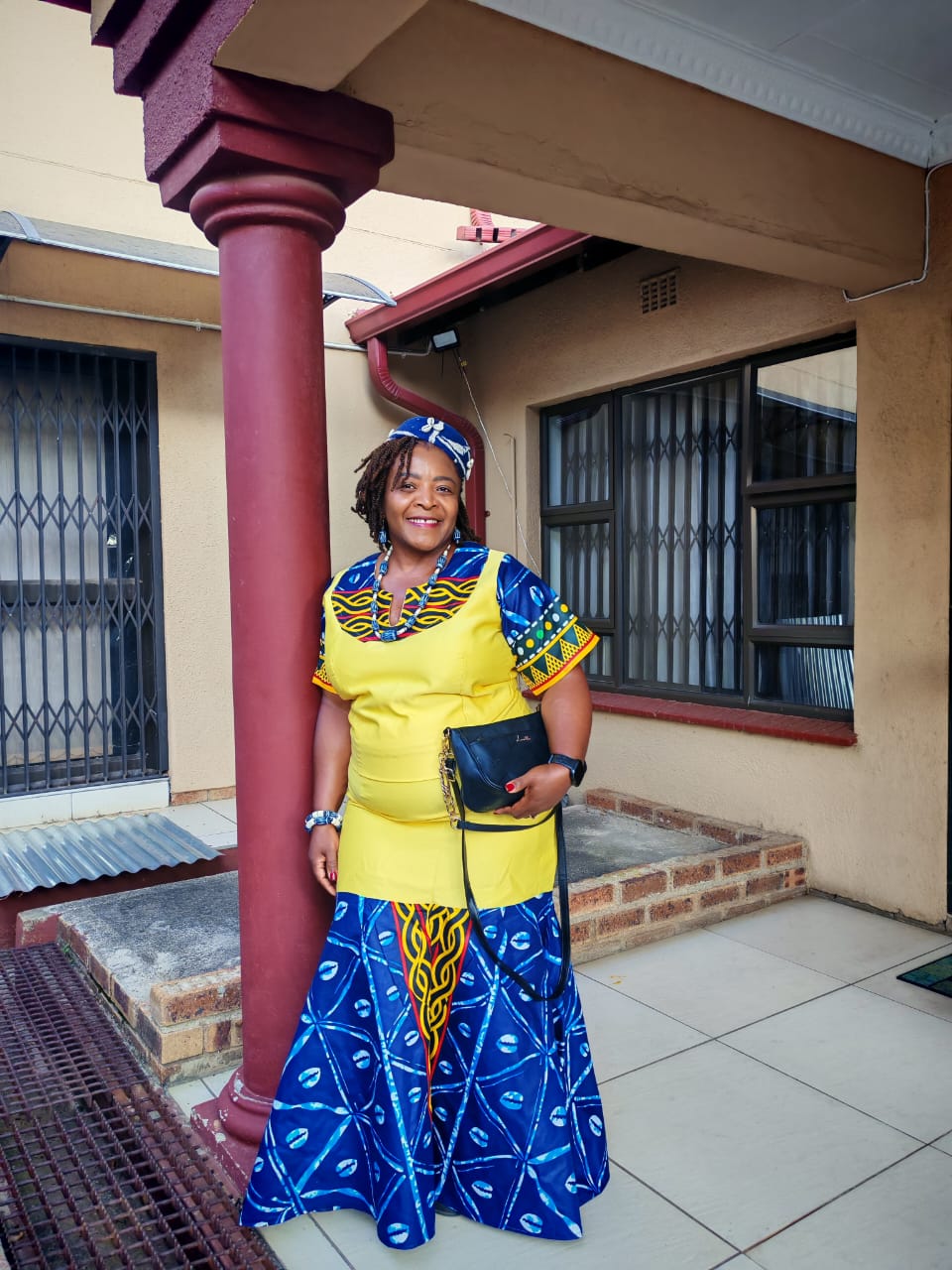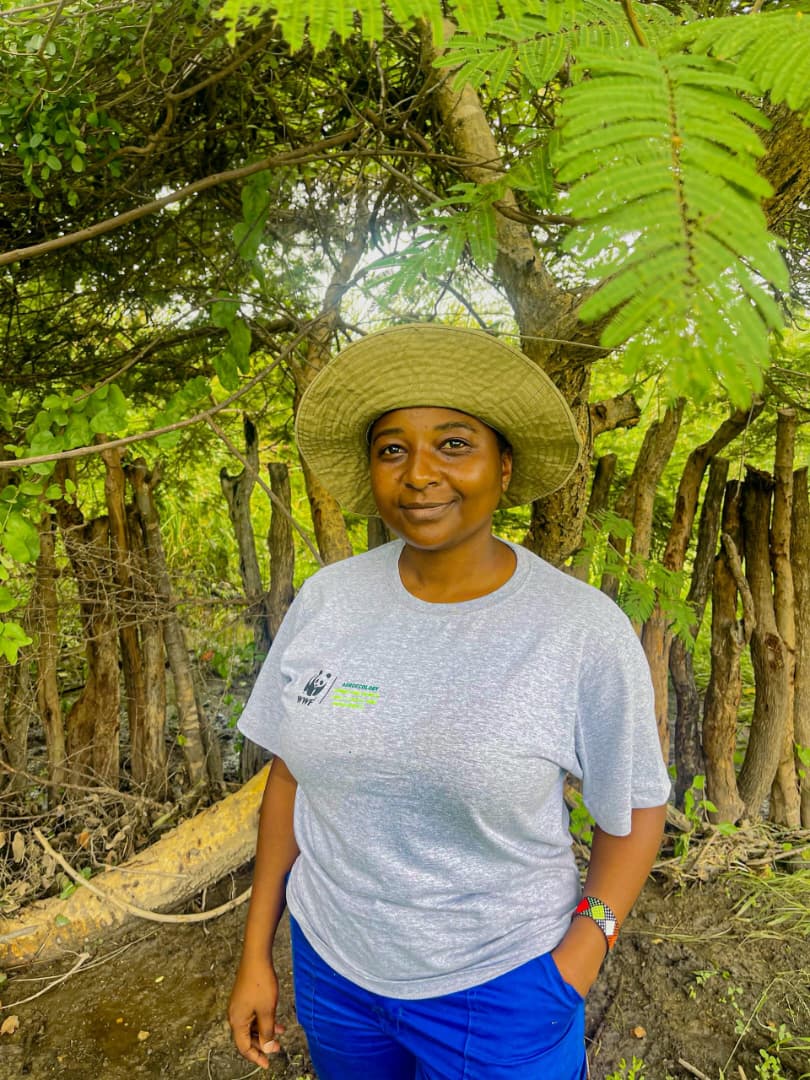
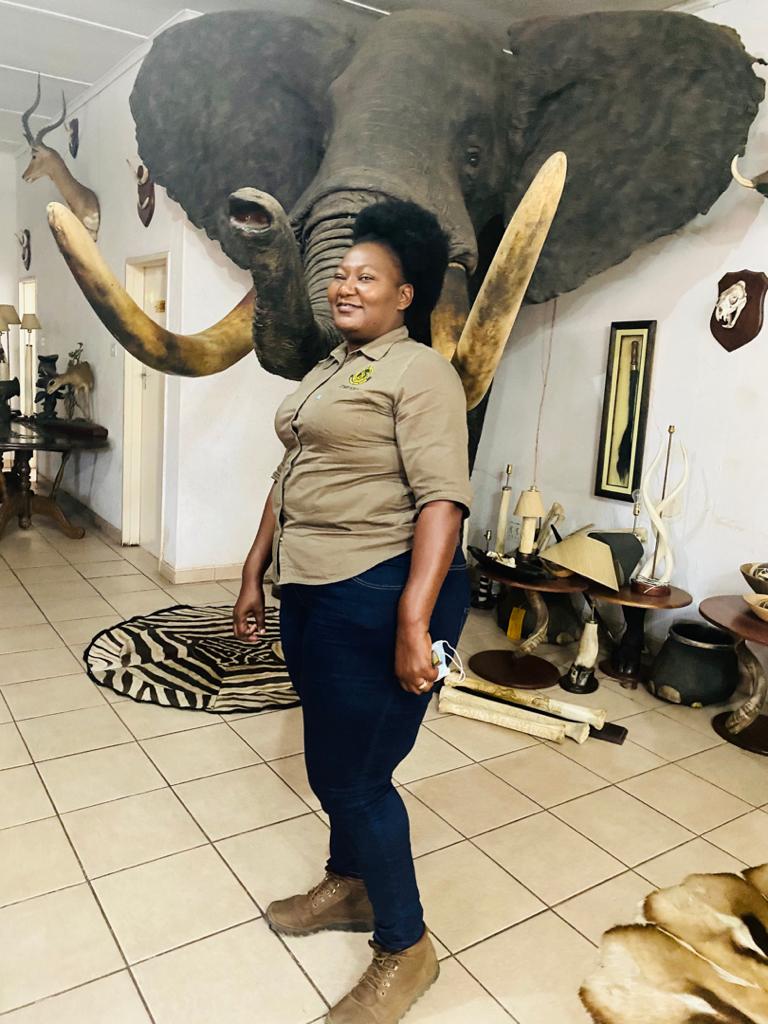
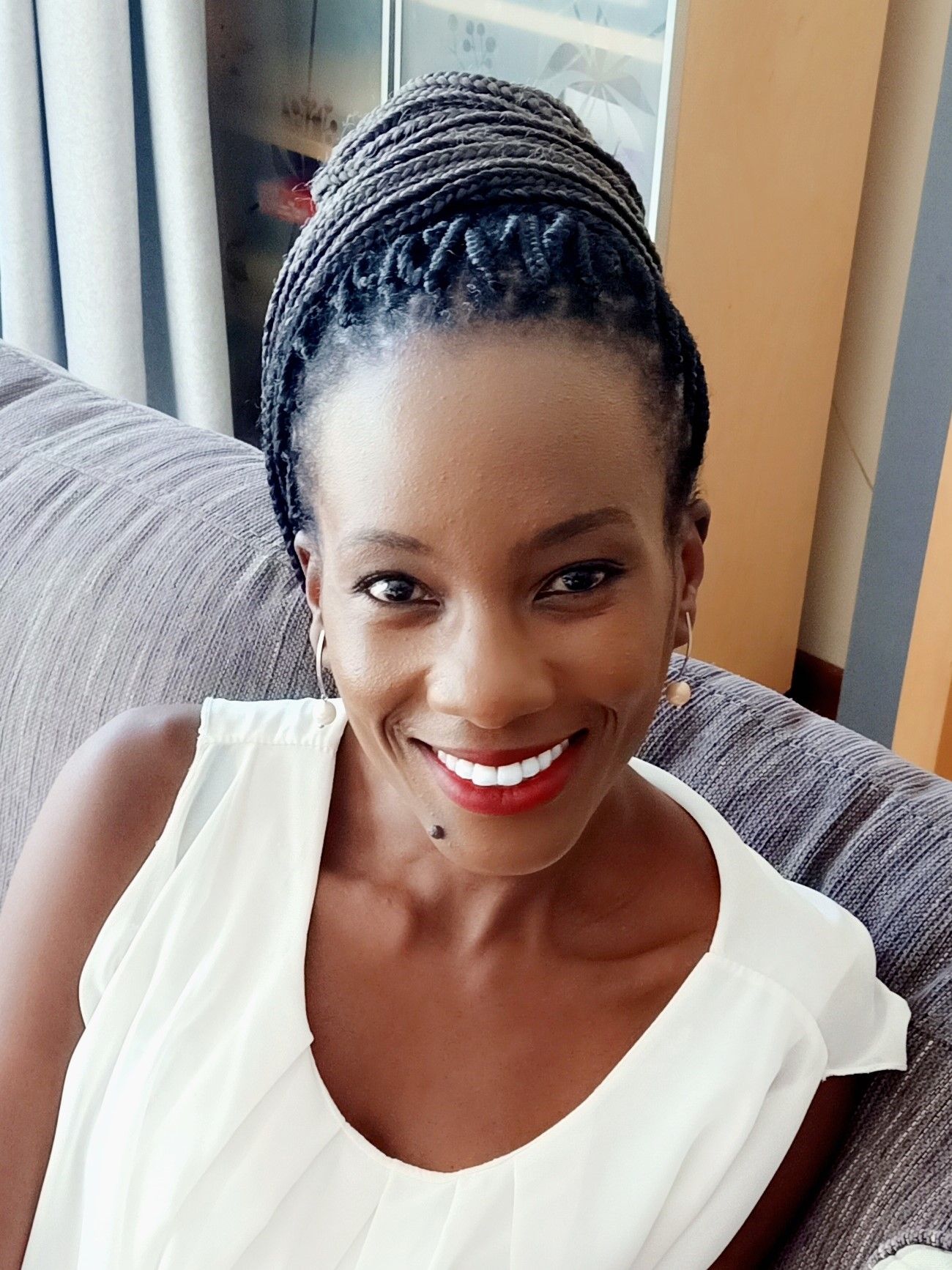
It is still dark outside when Kwanele Immaculate Manungo gets onto this Zoom call.
The light in her hotel room is the kind that makes everything feel half-awake. Somewhere beyond the window, Panama City is only just beginning to stir.
Kwanele has woken up early for this conversation.

In a few hours, she will join other delegates in the meeting halls to represent Zimbabwe in debates around how the world should protect forests, wildlife, water and life itself.
But right now, when she speaks about the environment, it sounds less like advocacy and more like someone talking about family. Because, for Kwanele, the environment is home, in the literal sense.
“I was born in a National park,” she says.
Not near a park. Inside it.
Her mother taught the children of employees working in Hwange National Park. Their home sat within the protected area and was surrounded by bushveld that stretched endlessly outward.
“In the mornings,” Kwanele says, “we would wake up and see tracks outside our house. Or dung. And we knew elephants had passed by.”
None of it felt extraordinary. Wildlife was part of life, and you learned how to move around it the way you learn how to cross a road.
“If you grow up like that,” she says, “you don’t think of protecting the environment as work. You think of it like… protecting your home.”
Today, she says, that world feels almost mythical.
Poaching has wiped out many of the rhinos she once saw casually from her house. Bushes have been cleared for human settlements, and wildlife corridors have shrunk.
She remembers a small shrub that no longer exists. As children, they would dig up its roots and eat them as a snack. But there was always a rule: don’t finish it, don’t destroy the plant, and leave part of it in the ground so it grows again. Years later, she returned to that area and looked for it. She wanted to taste it again. But it was gone. The rule had been broken.
“That one made me sad,” Kwanele says. “It’s such a small thing, but… it was part of us.”
***
On completing high school, her next move was, one might say, inevitable. She joined the research department at the Zimbabwe Parks and Wildlife Management Authority (ZimParks), where she volunteered to assist with various tasks.
Some days she recorded wildlife sightings. On other days, she took notes as researchers discussed ecosystems, species trends and management plans.
At first, all this was temporary.
But the longer she stayed, the more she enjoyed the rhythm of it. So, when her high school exam results came out, instead of leaving in search of something new, she stayed put in the place that felt like (and indeed was) home.
She studied as she worked. She earned qualifications step by step and applied for positions when opportunities opened.
“As I was growing older, my career was also growing within the organisation,” she says.
More than two and a half decades later, Kwanele still works with the ZimParks.
***
Everyone wants something from the same piece of land, and Kwanele’s job is to help find a way for those needs to coexist.
“I work with different stakeholders,” she says. “Government, communities, NGOs… We sit together and make decisions.”
It sounds straightforward when she says it, but the reality is not that simple.
***
Over the years, Kwanele began to notice that, however well written, conservation policies often failed the very people living closest to protected areas. Families who depended on natural resources were sometimes treated like threats rather than partners. Women, especially, bore the heaviest burdens, yet they were rarely included in decision-making.
To her, that made no sense.
“If conservation doesn’t help people survive,” she says, “people cannot care about it.”
So she began leaning into that gap.
Working alongside community leaders, she helps identify women who are most in need of income: widows, single mothers, and households with little or no formal employment. Then she works with them to build livelihoods that depend on the environment without degrading it.
In some areas, women harvest grass and hay from designated zones within or around protected areas for income: thatching material, fodder, and products sold to safari lodges and nearby tourism operators.
Kwanele helps connect them directly with buyers who offer better prices than middlemen do. She negotiates with lodges so the women earn something meaningful for their labour.
In other communities, ZimParks has helped establish small craft centres. She works with women to source materials, sometimes even arranging group purchases from other regions so they can buy in bulk and resell at a profit.
“When they see that conservation brings income,” she says, “they protect the environment themselves. You don’t even have to force it.”
That, according to Kwanele, is the difference between a project that lasts a year and one that lasts a generation.
Her work with young people carries a similar spirit.
“We have so many youth who are educated,” Kwanele says. “And they want to work. They just don’t have opportunities.”
So, Kwanele brings them on to assist with wildlife counts. They help collect ecological data for ongoing research projects. They support long-term monitoring studies that scientists later analyse. They participate in clean-up campaigns, managing waste inside and outside park boundaries. They organise environmental awareness activities in nearby communities. Sometimes tourism operators provide small stipends to these young people so they can earn a little something.
She also helps them understand how conservation systems work, and, perhaps most importantly, makes sure they are seen. She invites them into forums and discussions where decisions are being made and ensures their voices are present in rooms they might otherwise never enter.

Listening to her talk about women and youth, it becomes clear that this is where Kwanele’s heart settles most naturally: in the slow, patient work of helping the marginalised realise they have a place in protecting the land.
***
If conservation is the ground on which Kwanele walks, then her feminism is the root beneath it.
Again, it begins at home.
Her mother lost her husband at a young age. In her community, the unspoken rule was that widowed women remain in mourning and devote their lives to caring for their children.
“There was no one else,” she says. “It was just her. And for me, I could see that a woman can make decisions, lead and survive anything.”
But when Kwanele entered the conservation field, she found a very different reality. The boardrooms were full of men in suits, and the field teams were mostly men too. Leadership was a closed circle, and women, no matter how capable, were pushed to the sidelines.
Even when a woman made it to the top, people questioned her. Instead of recognising her ability, they wondered who had helped her or what she had done to get there.
It was never a simple matter that she worked hard.
“I hated that with passion,” she says
Because it clashed so violently with everything her mother had shown her.
That dissonance gradually hardened into resolve. If the system wasn’t built to recognise women’s strength, then she would make sure women were seen.
Today, you see it in the way she works almost instinctively with women in communities, where she ensures they are not just beneficiaries of conservation programs but also decision-makers and earners.
You also see it in how fiercely she mentors younger women entering the field.
Some arrive already carrying their confidence like a shield. She doesn’t try to slow those ones down. She leans in and encourages the fire.
“You go, girl,” she tells them. “You can do it. Nothing should stop you.”
The quieter ones, she walks beside and nudges forward.
Because for her, women’s empowerment isn’t separate from conservation. It is conservation.
In many rural homes, she points out, women are the ones collecting water, gathering firewood, tending fields and feeding children. They are already managing natural resources every day, whether anyone acknowledges it or not.
“If you leave women out,” she says, “you leave out the people who are closest to the environment.”
***
If there’s one idea Kwanele returns to over and over again, it’s this: Everyone is an environmentalist.
She says it so simply. Like it should be obvious.
“Because we all live here,” she explains. “We all depend on the same things. When you protect the environment, you are protecting everyone. Including yourself.”
To Kwanele, being an environmentalist really comes down to care: Where you throw your rubbish, whether you replace what you take, whether you leave something for tomorrow…
“We are always affecting the land, whether we mean to or not,” she says. “Some of these things look small, but they matter…Think about a doctor, they don't say this is just a small mistake. Because a small mistake can cost a life. If they are careless, someone dies.”
To her, the environment is no different.
Maybe the consequences aren’t immediate, but the damage is slowly killing the planet.
***
For someone who has watched so much disappear, it makes sense for Kwanele to become cynical.
But she isn’t.
“I always try to be optimistic,” she says, “If you lose hope, then you stop working. And I see people trying every day. So I believe and have hope that things can change.”
She talks about the WE Africa leadership program with particular warmth.
“If there are a hundred of us driving this change, and each one connects with a hundred more…”
She trails off, smiling. You can almost see her doing the math in her head.
“That’s light,” she says finally. “And light spreads.”
It’s such a gentle way to describe hope.
***
She also shares a story of a group of women she once met in the Zambezi Valley. They were living near the river. Every day, as they tended to their gardens, they noticed a group of eland moving through the area.
At first, there were many.
Then, slowly, the numbers began to drop.
Someone was poaching them.
They went to the chief and reported the matter.
The poacher was eventually caught and removed from the community. Later, when someone called it conservation work, the women laughed.
Kwanele recalls their exact words, "We didn’t know we were conservationists. We were just protecting what is ours.”
“That’s why I say everyone is an environmentalist,” she says. “You just have to care enough to act.”
In a few minutes, Kwanele will step back into the formal world of official language and recommendations. But somehow, it feels like this simple story of women guarding a small herd of eland explains her life’s work better than anything ever could.
Conserving nature, as she sees it, isn’t about the grand gestures. It’s about noticing what is disappearing and deciding to protect what remains.
***
This interview is part of a series profiling the stories of the 2025 WE Africa leadership programme fellows. African women in the environmental conservation sector who are showing up with a strong back, a soft front, and a wild heart.
***
About Kwanele Immaculate Manungo
A seasoned conservationist and environmental leader, Kwanele Immaculate Manungo is dedicated to advancing sustainable practices and empowering women in environmental conservation. With over two decades of experience at Zimbabwe Parks and Wildlife Management Authority, she has honed her skills in wildlife management, community engagement, and policy development.
As a Senior Regional Manager, Kwanele has been instrumental in implementing strategies to protect biodiversity, combat poaching, and promote eco-tourism. She is committed to fostering collaboration between government agencies, NGOs, and local communities to achieve shared conservation goals.
Aligned with the vision of Women for the Environment (WE Africa), Kwanele is passionate about empowering women to take leadership roles in environmental conservation. She believes that by nurturing the next generation of female environmental leaders, we can create a more sustainable and equitable future for Africa.