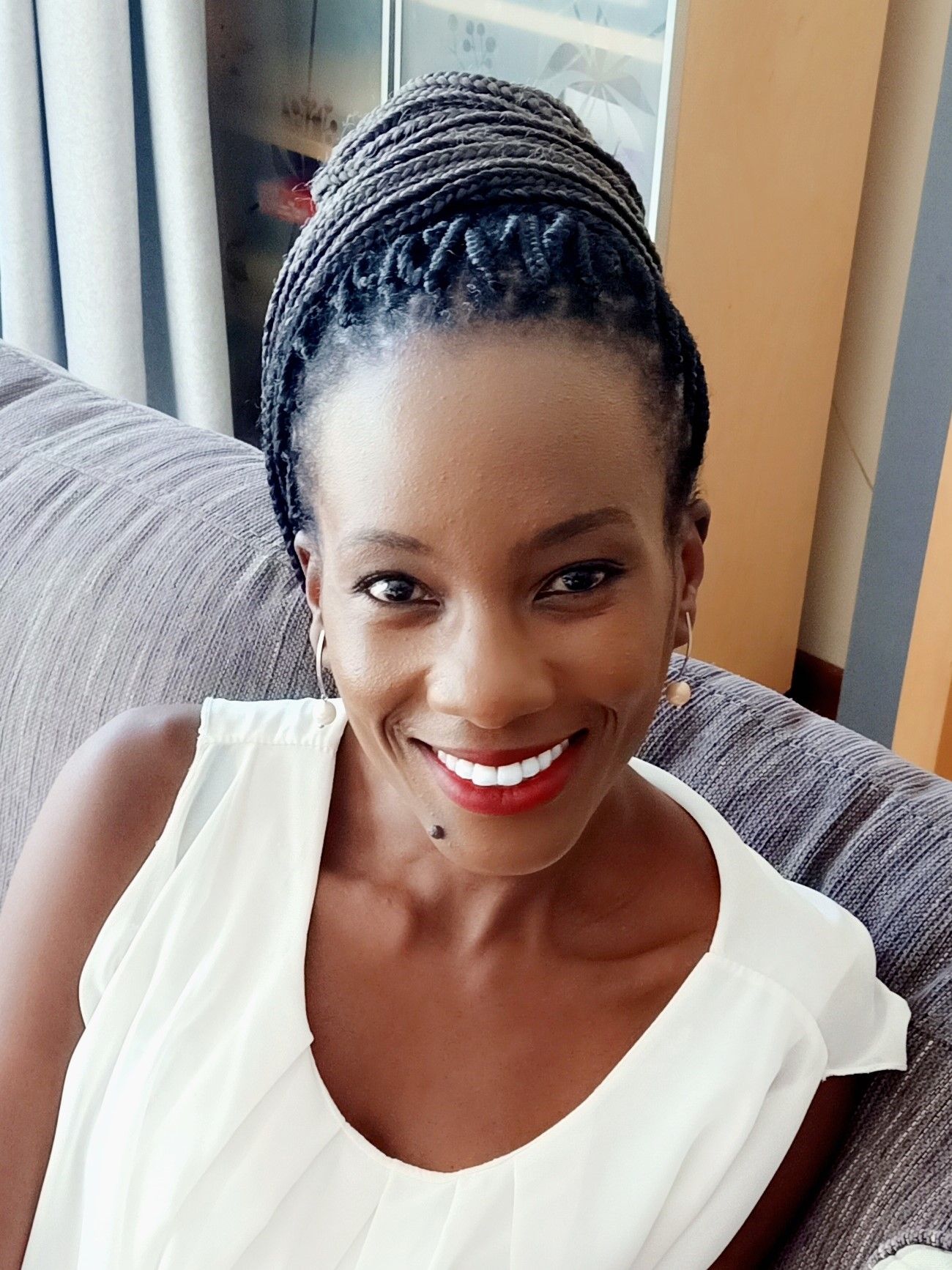
They say the best things in life come when you least expect them. For Tendai Chinho, that moment came while she was watching television.

The year was 2008. Tendai had just finished her A-levels and was living at home, waiting for her results to come out. She had nothing but time on her hands. To keep her occupied, her father subscribed to a full DSTV package.
So she watched television. Lots and lots of television.
She would scroll mindlessly through channels searching for something, anything, that might fill the long, uneventful hours. And then, one afternoon, something did.
A documentary on Nat Geo Wild stopped her in her tracks. She doesn’t remember the title. She isn’t even sure who the narrator was.
“It might have been David Attenborough,” she says, laughing.
What she does remember is that it was set in the Congo Basin.
She remembers the gorillas.
And she remembers falling in love.
Maybe it wasn’t really love, but more like a sudden jolt, something instinctive and almost overwhelming.
Up until then, her world had been relatively contained.
“My mum was very strict,” she says. “We rarely went anywhere. But watching this show, I remember thinking… there is so much out there that I haven’t seen.”
As the intensity subsided, something new took its place.
“I felt like… I needed to do something,” she says. “Like, save the gorillas…”
Today, she laughs at that thought.
“It sounds crazy,” she says. “How do you even say that? Who am I to save gorillas?”
But something had changed for Tendai. Irrevocably.
***
On her university application form, Tendai listed Environmental Science as her first choice. Radiography came second, and Forestry and Wildlife was her third.
She knew her math grades might keep her out of Radiography, but she listed it anyway to please her father, who worked as a medical equipment electrician, and hoped she would go into medicine.
When the placements came back, she had been offered a place in Forestry and Wildlife.
Her father was not impressed.
“So you’re going to be a ranger?” she recalls him asking.
He wasn’t dismissing her choice. He was just worried.
In Zimbabwe, as in most other places, when a child goes to university, there is an unspoken expectation that they will come out with something that can sustain their life (and sometimes the lives of the wider family).
Professions like medicine, engineering and accounting come with a clearer promise of that. Conservation? Not so much.
So when Tendai was selected for Forestry and Wildlife, what her father was really asking was: Will this take care of you?
People around her tried to reassure him.
“They were like, it’s fine, there is tourism, those people make money,” she says.
Tendai, meanwhile, was not making the decision from a place of fear, but from the same instinct that had first led her here.
“What will I enjoy doing?” she remembers thinking.
The answer was clear to her.
So she went for the Forestry and Wildlife course.

***
As it turned out, her father’s concerns were not completely unfounded.
After graduation, she could not find opportunities in conservation. Many roles were tied to government institutions or private conservancies, and these spaces required experience, connections or both. And so, like many of her peers, she turned to whatever was available, which in this case was teaching.
It was a terrible choice for her.
“It was so depressing,” she says. “I feel bad saying that, because it’s a beautiful profession.”
It was not just that she did not enjoy the work. It was the sense that she was moving further and further away from something she so badly wanted to do.
There were days she could not get out of bed. Her mother had to call the headmaster and make excuses. This was a clear warning sign.
“I knew if I didn’t do what lights my fire, I would die,” she says. “Literally.”
She began looking for a way back to conservation and found it through a programme at the University of Cape Town in neighbouring South Africa.
She applied and was accepted.
But she had no money.
Her brother, who was in Johannesburg at the time, asked her where she would stay.
“I don’t know,” she told him. “But I know I need to go.”
If there was ever a moment of blind faith in her life, that was it.
***
The first months were about survival.
Sometimes she stayed with relatives, sometimes with friends. One of the homes she stayed in, she remembers, was not a place a young woman would feel entirely safe. Lectures could run late, and she could not afford to be out after dark.
Still, she made it work.
“You just manoeuvre,” she says.
At the same time, her course needed more than what her living spaces could offer. She needed space to think, write, focus. She needed reliable Wi-Fi.
“You’re sleeping with the kids,” she says. “You can’t say, ‘I need space.’”
True to her nature, Tendai came up with another solution.
By day, the lab where she worked was full of students. By night, it emptied out. That was when she would take out her sleeping bag and small pillow, lay them on the floor, and sleep.
In the morning, she would wake before anyone arrived. She would open the windows so the room would not carry the smell of someone having slept there. She would hide her things in a locker, shower, change, and take her place among the other students.
“I looked like I just arrived,” she says.
She didn’t know if her sacrifices would pay off, but she didn’t dwell on it.
“You can’t think too much,” she says. “You just do what you need to do.”
Meanwhile, she applied for funding wherever possible, and eventually, some money came through. It didn’t solve everything right away, but it allowed her to finish her studies and stay on her chosen path.
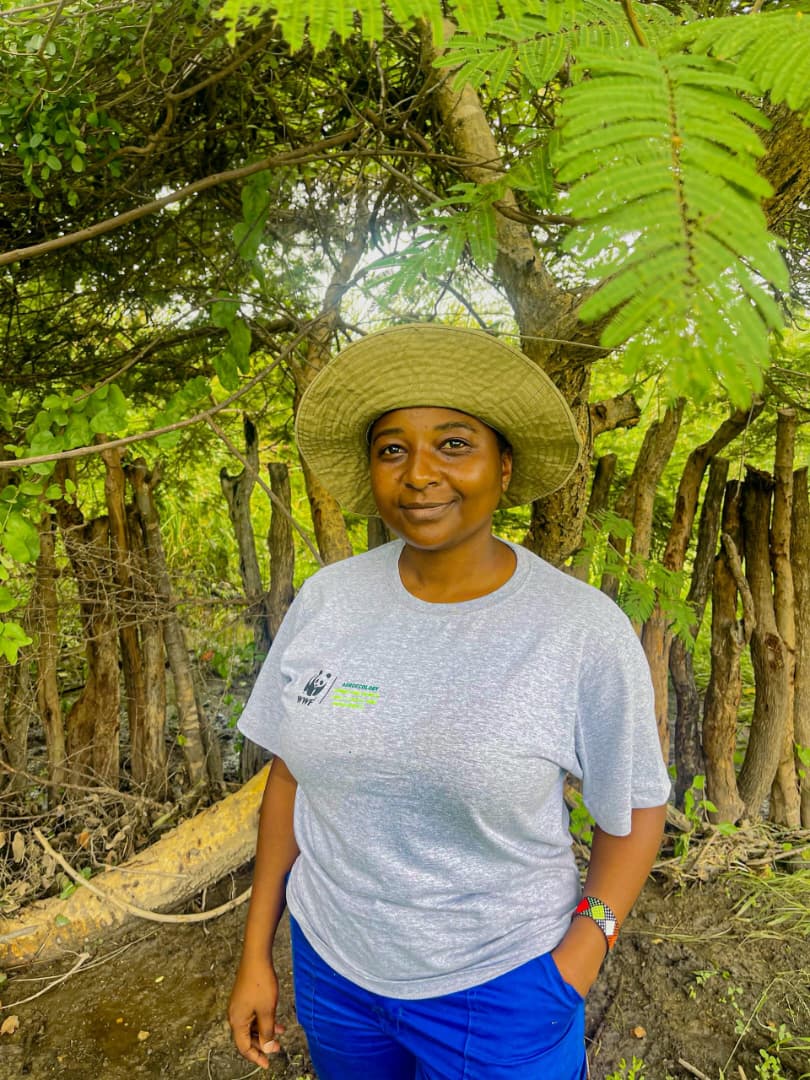
That path led her to the World Wide Fund for Nature (WWF). When she got in, it felt almost unreal.
“I was like… wow,” she says. “Here I am, wearing the panda. It felt like a dream.”
But it is not a fairy tale so much as it is a story of a young woman showing up and doing what needed to be done while trusting something she could not fully explain.
“I later saw the interviewing panel’s notes, and realised my UCT degree had given me an added advantage.”
Only then did she fully understand that everything she had fought for had been worth it.
***
Today, Tendai works with WWF as a Project Manager for a climate adaptation initiative, leading work in Zimbabwe within the Kavango–Zambezi Transfrontier Conservation Area.
Her job focuses on building resilience in both ecosystems and communities. In a small office, her work goes beyond a single project. She leads restoration efforts and supports nature-based solutions, ecosystem adaptation and proposal writing. Sometimes, she also gets involved in policy work when needed.
“I just see a gap, and I go for it,” she says.
For Tendai, conservation is shaped as much by her Christian faith as it is by science.
“Man was the last creation,” she explains. “Meaning everything we could ever need is already in nature.”
From this perspective, her work is about rebuilding ecosystems, helping people reconnect with nature, and working towards a balance that once existed.
“It’s restoring things to how they were in the Garden of Eden,” she says.
***
By the time Tendai decided to apply for the WE Africa program, she was growing into her role. But with that growth came questions about leadership and what it might cost her.
“I was struggling,” she says. “There was a lot of mom guilt.”

Her work often took her away from home for long stretches, and she was always trying to balance work and family. The people around her didn’t make it any easier.
“You’re travelling too much,” she remembers being told. “If you go higher, you’re going to get divorced.”
So even though she wanted to do more, she started to doubt herself.
“Am I asking for too much?” she wondered.
Deep down, she knew she couldn’t make a real difference by staying where she was. She needed a space to think things through without having to explain or defend her passion.
“I needed people who’ve walked the walk, people who are doing or going through what I’m going through,” she says.
WE Africa became that space.
For the first time, she saw women leading while holding their lives together, doing so honestly. She immediately saw that she had been holding herself back.
“I had dimmed my light. I wasn’t being Tendai. Yes, people change, you become a mum, and you change, but there is a part of you that doesn’t change. That child in you is what really drives you, the one with no inhibitions or fears. The one who knew what you wanted.”
Through conversations and coaching, she began to understand that when it comes to leadership, she was, in fact, enough. “Who you are is what’s needed,” she says.
She became more comfortable speaking up, even in spaces where she had once held back. Where she had once felt the need to defend herself, she now found herself listening more.
“I found more peace,” she says.
Perhaps most importantly, she found her tribe.
She had grown up hearing that women can’t work together, that they make difficult bosses. But this experience showed her the opposite: women can support each other, hold space for one another, and grow together.
“There is so much power when women support women, and I think that scares a lot of people,” she says. “It is so strong and so dangerous. I think that’s why they try to make it seem like it’s impossible.”
With that knowledge, she is intentional about supporting other women in small, everyday ways and in the spaces where it matters most.
“If I’m ordering an Uber, I look for women drivers,” she says.
At work, she notices how women are treated, whether they’re supported or overlooked. When women are overlooked, she speaks up. When new women join, she makes sure they know they’re not alone.
“We may not be friends,” she tells them, “but just know I’m here.”
In the end, WE Africa has reaffirmed that first instinct that began in front of a television all those years ago.
“Confirmation,” is how Tendai puts it. “That everything I’ve gone through was meant for me, and has been worth it.”
***
This interview is part of a series profiling the stories of the 2025 WE Africa leadership programme fellows. African women in the environmental conservation sector who are showing up with a strong back, a soft front, and a wild heart.
***
About Tendai Chinho
Tendai Chinho is a Conservation Biologist specialising in ecosystem restoration with the World Wide Fund for Nature (WWF) in Zimbabwe. She has seven years of diverse experience spanning biodiversity management, sustainable development, policy, and gender mainstreaming. Currently, Tendai leads a climate adaptation initiative within the Kavango-Zambezi (KAZA) Landscape, focused on enhancing community resilience to climate change through Nature-based Solutions. Her work and interests centre on conservation as a pathway to sustainable development. Outside of work, she enjoys birdwatching, hiking, and exploring cooking shows.